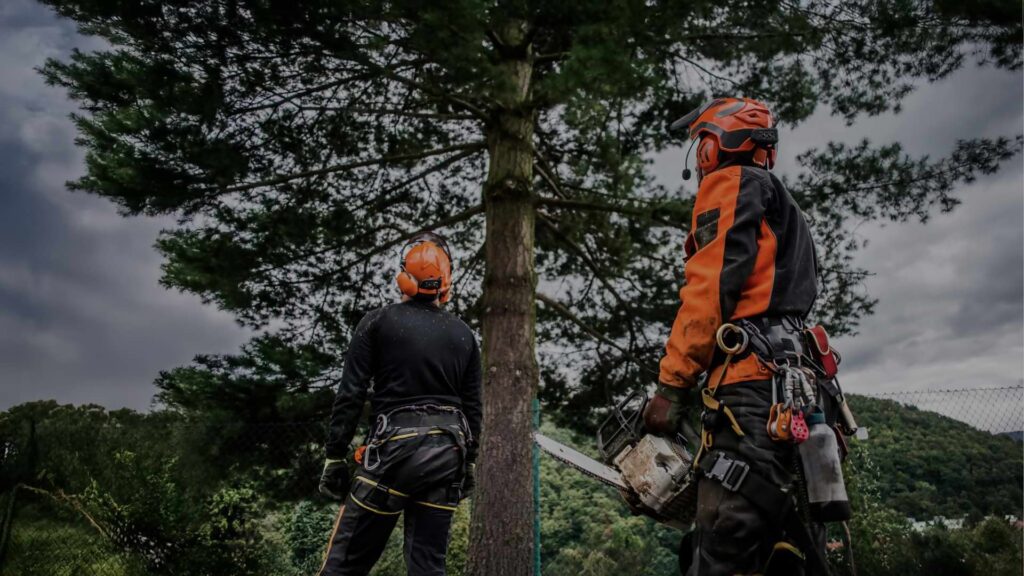
A leaning tree can look dramatic, almost like it’s caught in mid-fall. Some homeowners panic, others shrug it off. The truth lies somewhere in between. A leaning tree might be in danger, but it could also just be finding its balance.
At Oztreelo, we’ve seen every kind of leaning tree Brisbane has to offer: from old gums bending gracefully in Chapel Hill to garden trees in Kenmore that suddenly start to tilt after heavy rain. The good news? Many leaning trees can be saved. The key is knowing when to act, and when to step back.
Why trees lean in the first place
A leaning tree is simply a tree that’s lost its balance and that can happen for a few reasons.
Some trees naturally grow on an angle to reach the sun. You’ll see that a lot in The Gap and Mt Gravatt, where slopes and shaded gardens make trees stretch sideways for light. These are “natural leans,” usually nothing to worry about.
But when a previously straight tree begins to tilt, it’s often a sign of something deeper. Common causes include:
- Soil movement after heavy rain or construction nearby
- Strong winds that loosen roots
- Root rot from poor drainage or overwatering
- Uneven growth when one side of the tree is heavier than the other
A leaning tree doesn’t always mean trouble, but if the lean is new or worsening, that’s when it’s time to call a professional.
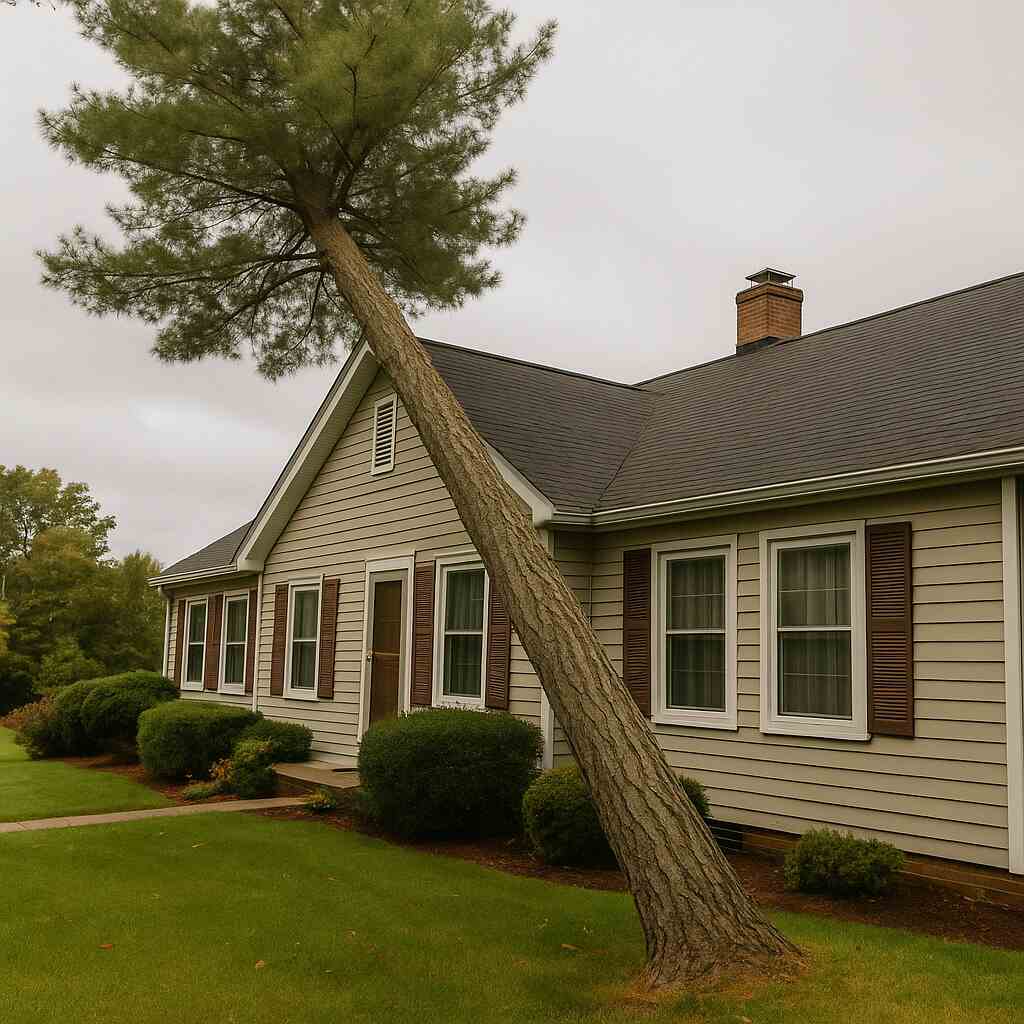
The danger signs to look for
Not all leaning trees are dangerous, but some give clear warnings.
You should pay close attention if you notice:
- Soil cracked or lifted on one side of the tree
- Roots starting to show
- Fresh splits in the trunk or bark
- Branches hanging lower than before
- The lean getting worse after rain or wind
A tilted tree that changes quickly is like a crack in a wall, it means something’s shifting underneath. We’ve seen plenty of this across Ipswich and Forestdale, where heavy storms and soft soil can tip trees over almost overnight.
Can you fix a leaning tree yourself?
For small, young trees, maybe. For older or larger ones, definitely not.
If the tree is young and the roots are still flexible, you can often re-stake it upright using sturdy supports. The trick is to do it gently, forcing it upright too quickly can damage the roots further.
But for a mature leaning tree, especially one taller than three metres, it’s a different story. The weight and structure of larger trees make them unpredictable. A DIY fix can lead to more damage or even cause the tree to fall.
We always tell homeowners in Salisbury and Forest Lake: if you’re unsure, don’t test it. Call an arborist. They’ll know whether the leaning tree can be straightened, supported, or if it’s safer to remove it.
How arborists save a leaning tree
When you contact a professional like Oztreelo, the first step is a full inspection. We check the root system, soil type, and angle of lean. Every leaning tree has its own story, and we want to know what caused it before deciding what comes next.
Here are the most common ways we save leaning trees:
1. Cabling and bracing
Strong steel cables or soft straps can support a leaning tree and redistribute weight. This is ideal for large trees that are structurally sound but unstable. It helps the tree stay upright while it naturally strengthens its roots.
2. Selective pruning
We remove heavy branches from the leaning side to reduce pressure on the trunk and roots. The balance shifts back toward the upright side, giving the tree a better chance to recover.
3. Soil treatment and stabilisation
Sometimes, the issue isn’t the tree, it’s the soil. We fix drainage issues, improve compaction, and give the roots room to breathe. In clay-heavy suburbs like Kenmore and Mt Gravatt, this is often what makes the difference between saving and losing a tree.
4. Re-staking and support for young trees
For younger leaning trees, we use flexible ties and deep stakes, allowing them to grow straight again without damaging new roots.
In many cases, this combination of careful pruning, bracing, and soil work can save a leaning tree that seemed doomed.
When a leaning tree can’t be saved
Unfortunately, not every leaning tree has a happy ending.
If the roots are damaged or rotting, the lean will only worsen. A tree leaning at a sharp angle (more than 15-20 degrees) is often too far gone. Likewise, if it’s leaning toward a house, fence, or power line, the risk is too high to ignore.
In Chapel Hill and The Gap, we often see older gum trees that look majestic but are hollow inside. Even if they’re still standing, internal decay means they could snap without warning.
In these cases, removal isn’t about giving up, it’s about safety. Once the leaning tree is gone, the space can be replanted with something more stable, better suited to your soil and yard layout.
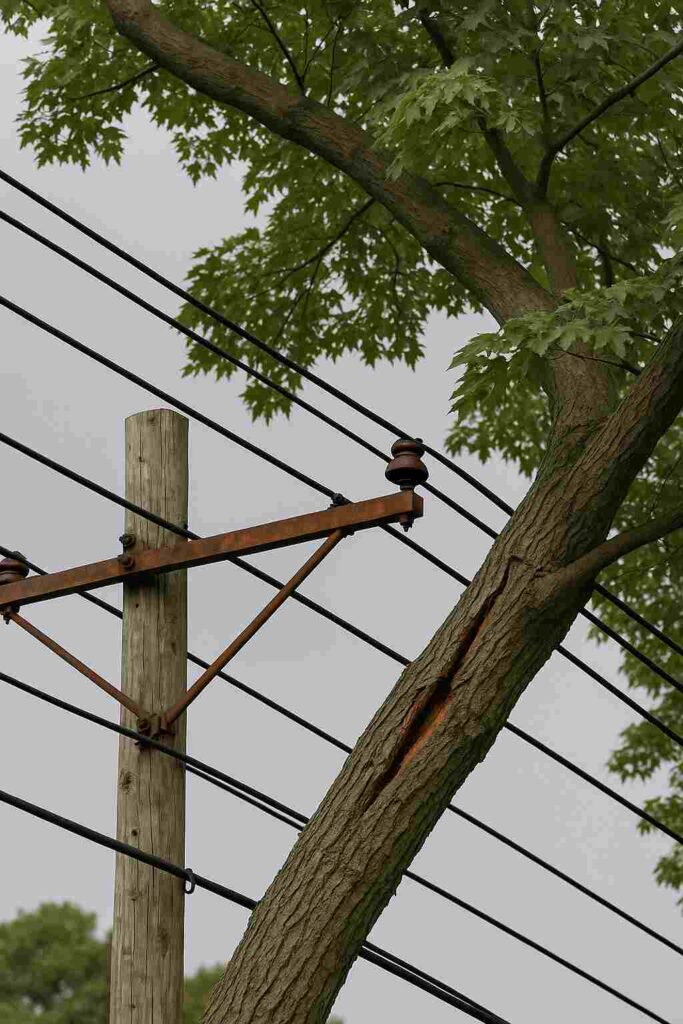
The risks of ignoring a leaning tree
A tilted tree is like a slow-moving hazard. It might stay put for months, until one big storm finishes what time started.
Falling trees cause millions in property damage across Queensland every year. We’ve seen leaning trees in Forest Lake and Ipswich come down suddenly, taking fences, roofs, and sheds with them.
Even if it doesn’t fall completely, a leaning tree can drop branches, tear up driveways, or crush garden beds. And if it injures someone or damages a neighbour’s property, you could be held responsible.
The longer you leave it, the more complicated and expensive the fix becomes.
The cost of saving vs removing
Every leaning tree is different, but generally:
- Saving a leaning tree with pruning or bracing is cheaper and faster.
- Removing a leaning tree becomes necessary when safety is in question.
Homeowners in Salisbury and Forestdale often ask if it’s worth saving a leaning tree. Our answer: if it’s healthy and the lean is mild, absolutely. But if the structure’s weak or decay is spreading, removal saves money (and stress) in the long run.
What happens after a leaning tree is removed
Once a leaning tree is gone, the stump remains and that’s where new issues can start.
Leaving a stump in the ground might seem harmless, but it can attract termites, fungi, or regrowth. That’s why Oztreelo includes stump grinding in almost every job. It clears the area completely and prevents future problems.
Homeowners in Mt Gravatt and Kenmore often turn the cleared spot into a new garden bed or plant a smaller, safer species in its place.
How weather affects leaning trees in Brisbane
Queensland weather can be brutal on trees. High humidity, unpredictable storms, and saturated soil all increase the chance of a lean turning into a collapse.
In The Gap and Chapel Hill, trees growing on slopes face constant erosion pressure. In Ipswich, dry periods followed by heavy rain loosen soil around roots. Meanwhile, Forest Lake often sees older trees leaning after years of slow soil movement.
That’s why regular maintenance is vital. A leaning tree that’s monitored, pruned, and supported properly can survive decades longer than one left to its own devices.
Preventing leaning trees in the future
Prevention starts when you plant.
Choose the right species for your soil and space. Give roots room to grow. Stake young trees for the first year or two, but remove stakes once they’re strong enough to stand alone.
Regular pruning helps too. Removing heavy limbs before storm season keeps trees balanced and healthy.
And most importantly, keep an eye on your trees after major weather events. If you notice any change in their angle, call a professional before it becomes an emergency.
How Oztreelo handles leaning tree jobs
Since 2014, Oztreelo has been helping homeowners across Brisbane North, Brisbane South, Ipswich, Logan, and Springfield with professional tree care. We’re a family-owned business, and we treat every yard like our own.
Here’s how we handle leaning tree jobs:
- Inspection and assessment: We check the lean, soil, and structure.
- Recommendation: You get clear advice: save, brace, or remove.
- Action: Our team safely prunes, supports, or removes the leaning tree.
- Cleanup and follow-up: We grind stumps, clear debris, and check for hazards.
We’ve built our reputation on honest advice, if we can save it, we will. If it’s unsafe, we’ll remove it with care and leave your property better than before.
The emotional side of losing a tree
For many homeowners, a leaning tree isn’t just part of the yard, it’s part of the home. We’ve seen tears shed over old mango trees and backyard gums that held childhood swings.
That’s why we approach every leaning tree job with respect. Even when removal is unavoidable, we often help families plant something new, a smaller native, a fruit tree, or even a hedged boundary.
It’s not about cutting down trees. It’s about protecting what matters most: your home, your safety, and the balance of your space.
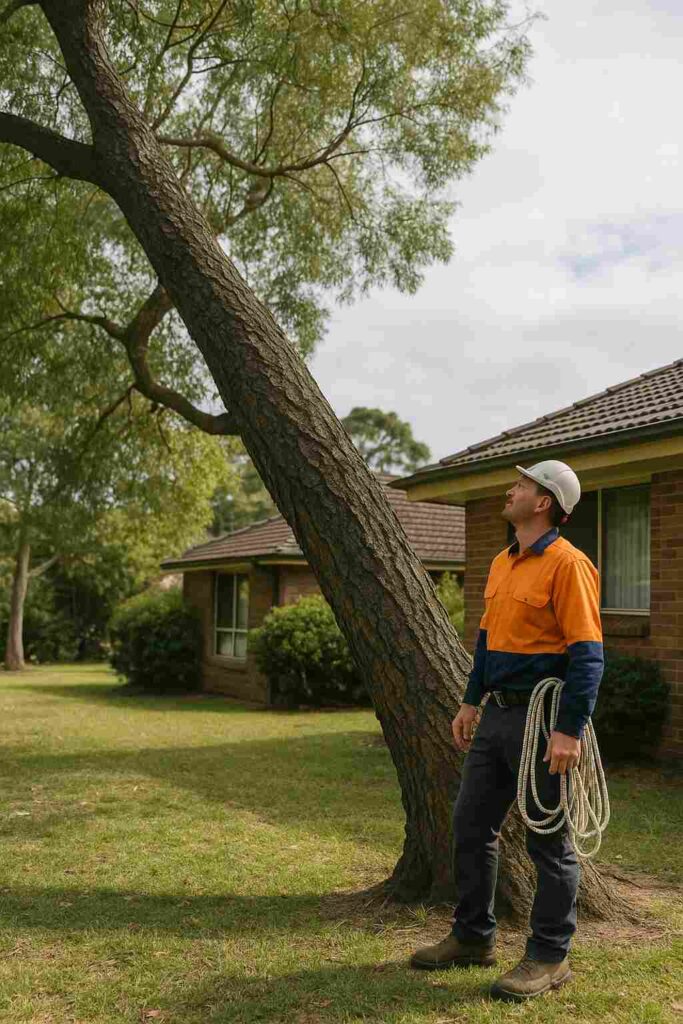

So, can a leaning tree be saved?
Often, yes, if you act early.
The sooner you notice the change and call in an expert, the better the odds. A small tilt can often be corrected. A large one can’t.
If you live in Chapel Hill, Kenmore, Salisbury, Mt Gravatt, Ipswich, The Gap, Forest Lake, or Forestdale, and you’ve got a leaning tree on your property, don’t wait for the next storm to decide its fate.
Let Oztreelo take a look. We’ll give you clear, honest advice and the safest path forward, whether that means saving your leaning tree or removing it before it becomes a problem.