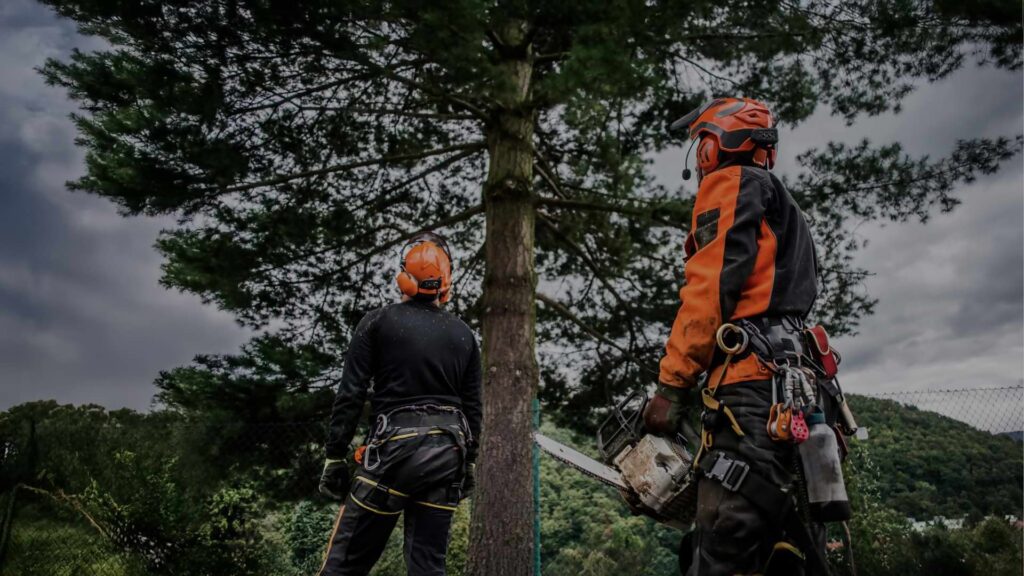
Not every leaning tree is an emergency waiting to happen, but some are. The trick lies in understanding why a tree is leaning, how fast it’s moving, and what its surroundings are telling you.
At Oztreelo, we’ve seen every kind of leaning tree Brisbane can throw at us, from elegant gum trees curving over a fence in Kenmore, to a stubborn jacaranda leaning quietly toward a pool in Salisbury. Some trees stand that way for decades without causing trouble. Others, given one wild storm, come crashing down overnight.
So do leaning trees always fall? Not always. But it’s the ones that might that keep homeowners awake at night.
What makes a tree lean?
A tree leans for the same reasons a person might start limping: imbalance, stress, or injury.
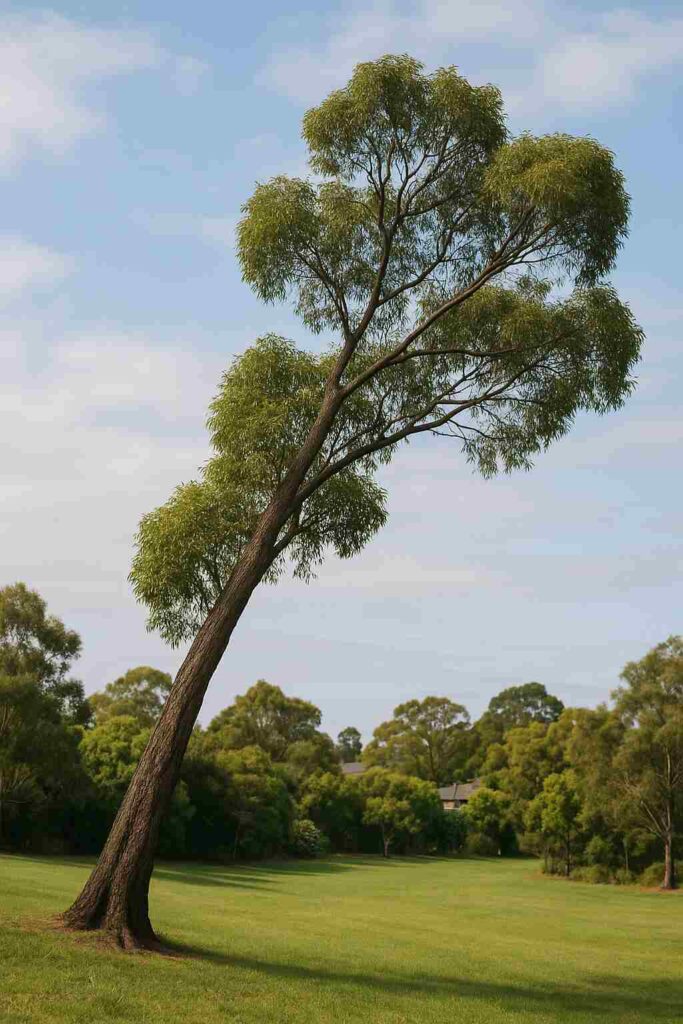
Some trees develop a natural lean early in life. Maybe they grew toward the sun or leaned away from a stronger neighbour. This kind of leaning tree is often harmless. Its roots adapt over time, anchoring it in its chosen position. You’ll see plenty of these around The Gap and Forest Lake, where open yards and sloped ground let trees find their own balance.
But not every lean is natural. Sometimes, a leaning tree is a symptom of something deeper: soil movement, storm damage, rot, or shallow roots. Once the balance is gone, gravity keeps working. And that’s when risk begins.
The danger of sudden leans
If a tree that once stood straight starts leaning suddenly, that’s a red flag.
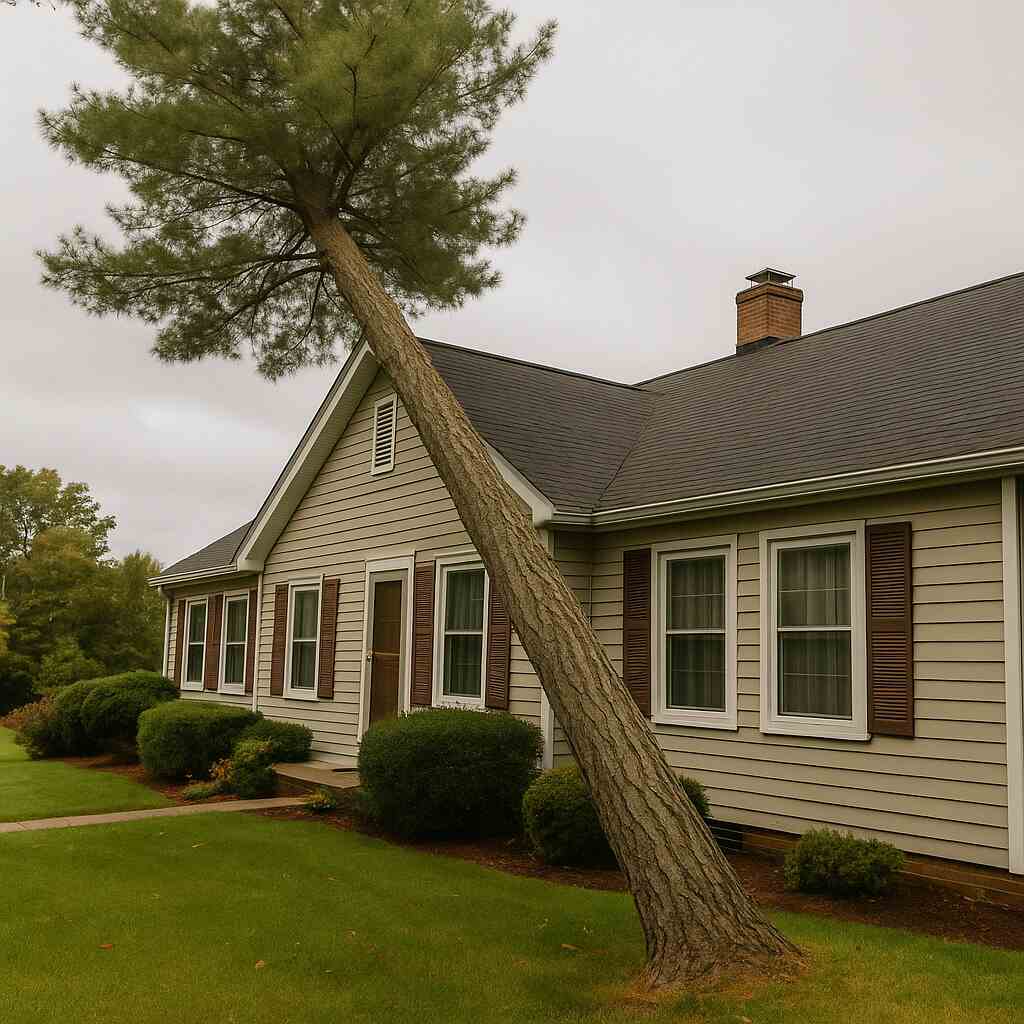
A sudden lean often means the root system has shifted or failed. You might notice lifted soil on one side, cracks forming near the base, or exposed roots on the side opposite the lean. In those moments, the leaning tree isn’t just unstable, it’s dangerous.
At Oztreelo, we’ve responded to plenty of emergency calls after high winds around Ipswich and Chapel Hill. Heavy rain loosens the soil, roots lose their grip, and even healthy trees can tilt overnight. Once that happens, the weight of the tree pulls further on the roots, and each day of delay makes it harder to save.
If you see new cracks, exposed roots, or a tree leaning more than before, don’t wait to find out how far it can go. That’s the perfect time to call a qualified arborist.
How arborists assess a leaning tree
When someone calls us about a leaning tree in Ipswich or Forestdale, the first question we ask is: When did you notice it start leaning?
Time tells the story. A tree that’s always leaned a little might just need monitoring. A tree that shifted last week could need urgent work.
Here’s what we look for during an inspection:
- Root plate movement: Are the roots pulling up one side of the ground?
- Trunk cracks or splits: Do you see new openings along the bark?
- Crown imbalance: Is the canopy heavier on one side?
- Soil condition: Is the soil compacted, soggy, or eroding?
- Surroundings: Is the leaning tree close to power lines, fences, or a house?
We combine this with our experience, over a decade of watching Brisbane’s trees through heat, floods, and cyclones, to decide if the leaning tree can be corrected, supported, or removed safely.
Can a leaning tree be saved?
Sometimes, yes. A leaning tree can recover if its roots are intact and its lean isn’t getting worse.
For younger trees, staking and bracing can help them grow upright again. For older trees, arborists can use cables or supports to stabilise the trunk. But this only works when the root system is solid and there’s no internal decay.
In Kenmore and Chapel Hill, where leafy yards often slope gently, we’ve corrected plenty of leaning trees simply by reducing weight on the leaning side. A careful prune, when done by a professional, can balance the canopy and take pressure off the roots.
But there’s a line between saving and gambling. When a leaning tree shows signs of rot, fungus, or split roots, saving it becomes risky. That’s when removal is the safest choice: for you, your home, and your neighbours.
What happens if you ignore a leaning tree?
It’s easy to hope a leaning tree will sort itself out. After all, trees have been standing longer than we have. But a leaning tree doesn’t forget gravity.
Over time, the lean increases. Roots stretch and crack. Moisture seeps into weak spots, feeding decay. Termites and fungi move in, eating away at the strength that once held the tree upright.
And while that’s happening quietly under the surface, the danger grows. We’ve seen leaning trees in Forest Lake that started off with a gentle tilt and ended up dropping entire limbs on driveways. In The Gap, a large gum leaned just a few more degrees one wet summer and pulled up half the footpath.
Ignoring a leaning tree often means turning a manageable problem into a costly emergency.
The hidden cost of a fall
When a leaning tree finally gives way, it doesn’t fall gently. The damage can be severe, to homes, cars, fences, or even underground pipes.
In suburbs like Salisbury or Mt Gravatt, where mature trees line tight streets, one falling trunk can block access or take down power lines. And when a leaning tree falls on private property, the responsibility for repairs usually lies with the owner.
That’s why early inspection saves more than just money, it can prevent the stress and chaos that comes with unexpected tree failure.
Why some leaning trees never fall
Here’s the twist: some leaning trees never fall at all.
Certain species, like eucalypts and paperbarks, are surprisingly adaptable. Their root systems spread wide, not deep, creating a flexible base that can withstand a fair amount of tilt. If that lean develops slowly and the roots remain firm, the tree adjusts and keeps growing confidently toward the sky.
We often find these survivors in Kenmore and Chapel Hill, standing proudly at a slant, still healthy and stable.
But even a stable lean deserves monitoring. Storms, droughts, and soil erosion can change the balance at any time. Regular tree inspections every few years keep you ahead of any surprises.
The role of soil and slope
If you’ve ever noticed that leaning trees seem more common in certain areas, you’re not wrong.
In The Gap and Mt Gravatt, sloping land is everywhere. Trees naturally grow at an angle to chase sunlight or compensate for uneven ground. As long as the soil is firm and the roots are deep, that’s usually fine.
But once the soil gets waterlogged or compacted, trouble starts. A leaning tree in clay-heavy soil can lose its grip faster than one in sandy soil, especially after long rain. In Ipswich and Forestdale, we often see this after seasonal storms, the soil swells, roots loosen, and a once-sturdy tree begins to shift.
Soil may not look like much, but it’s where a tree’s fate is decided.
What homeowners can do
If you have a leaning tree on your property, here’s what you can do before calling the experts:
- Take photos. Document its position over a few weeks to see if it’s moving more.
- Check the base. Look for lifted soil, cracks, or roots breaking the surface.
- Watch the weather. After heavy rain or strong winds, reinspect it.
- Avoid DIY pruning. Cutting the wrong branches can make a leaning tree even more unbalanced.
Once you’ve done that, contact a qualified arborist for an inspection. They’ll assess whether the leaning tree is stable, needs support, or should be removed.
At Oztreelo, we don’t jump straight to removal. We always look for ways to preserve a healthy tree when possible, but safety comes first.
When tree removal is the safest option
Sometimes, the only responsible choice is to remove the leaning tree.
If the roots are damaged, decay is visible, or the tree is leaning over a home or power line, removal prevents bigger problems later. We’ve removed leaning trees in Forest Lake that had hollow trunks, and in Salisbury where termites had eaten the core. In both cases, the trees looked fine from the outside until we cut into them.
The process usually involves:
- Sectional cutting (to avoid damage to nearby property)
- Lowering each piece safely with ropes or machinery
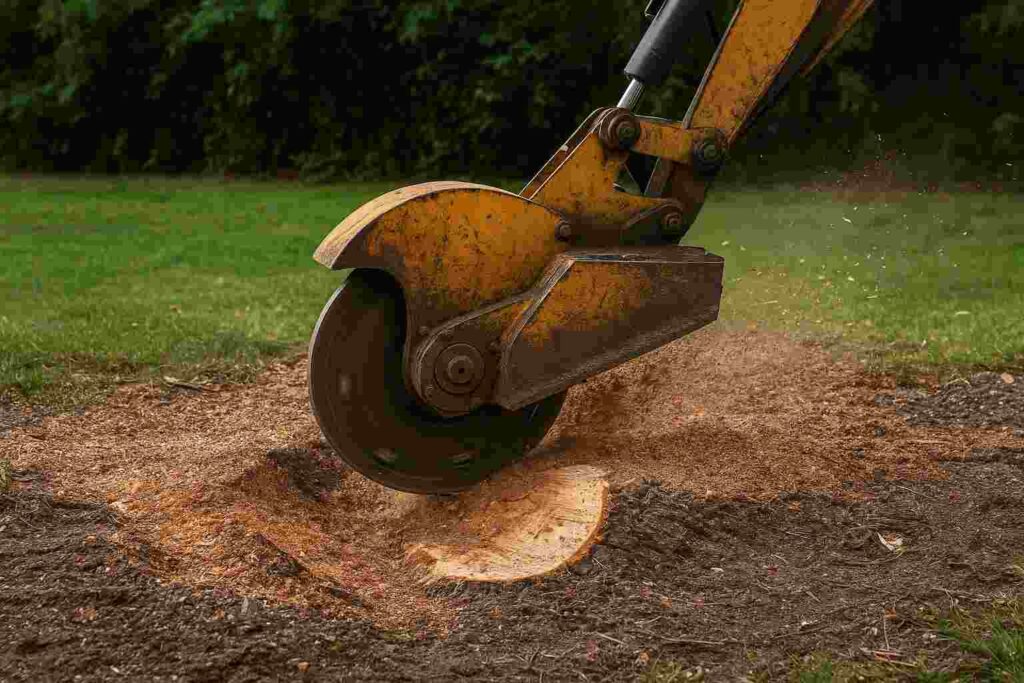
- Stump grinding afterward to prevent regrowth
The result is a clear, safe area ready for replanting, and peace of mind when the next storm rolls in.
What happens after a leaning tree is removed
After the leaning tree is gone, the stump remains and that’s where another problem can start.
If left, the stump can rot, attract termites, and even sprout new shoots. That’s why stump removal or stump grinding is part of almost every job we do. It keeps the yard tidy, prevents pest problems, and makes space for new landscaping.
In Kenmore and Ipswich, many clients choose to replant smaller, native species with stronger root systems that are less likely to lean in the future.
Leaning tree myths we hear all the time
“If it hasn’t fallen yet, it’s fine.”
Not always. Trees can hold a lean for years, until one bad storm finishes the job.
“If I just cut a few branches, it’ll fix itself.”
Improper pruning can shift the tree’s weight and make the lean worse.
“Only old trees lean.”
Young trees can lean too, especially if planted too shallow or without support.
“Straightening a big leaning tree is easy.”
It’s not. For mature trees, attempting to pull them upright often damages roots and makes them unstable.
Why local experience matters
Brisbane’s mix of clay soil, sudden storms, and large native species makes leaning tree issues tricky.
Having worked across Chapel Hill, Kenmore, The Gap, and Forest Lake, we’ve seen how different each suburb’s environment can be. In Mt Gravatt, large eucalypts grow close to homes on steep blocks. In Ipswich, older suburbs have massive trees sitting near power lines. In Forestdale, long roots stretch through soft soil, making certain trees more prone to tilt.
That’s why local knowledge matters. At Oztreelo, our arborists understand the specific soil types, species, and conditions that cause leaning trees in each area.
How Oztreelo can help
Since 2014, Oztreelo has been Brisbane’s trusted, family-owned tree care team. We specialise in:
- Tree lopping and pruning
- Tree removal
- Stump grinding and stump removal
- Hedge trimming and yard maintenance
We work across Brisbane North, Brisbane South, Ipswich, Logan, and Springfield, helping homeowners keep their properties safe, tidy, and beautiful.
If you’re dealing with a leaning tree or aren’t sure whether it’s safe, we can inspect it and give you honest advice. Sometimes that means bracing or pruning. Sometimes it means removal. Either way, we’ll make sure the job is done safely, efficiently, and with care for your property.
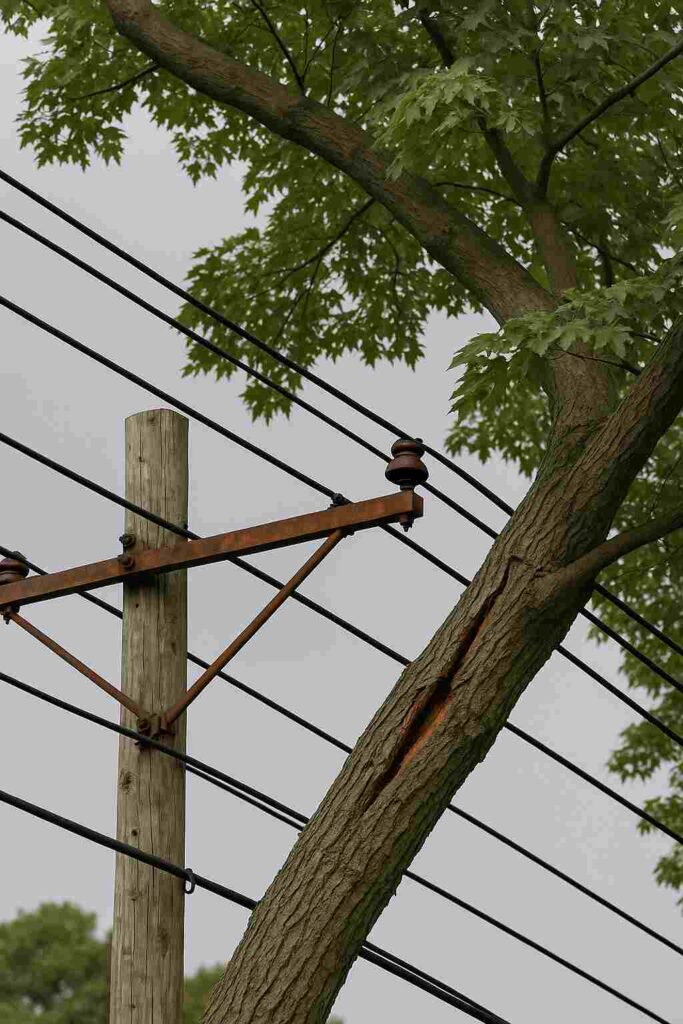

So, do leaning trees always fall?
No. But they always deserve attention.
A leaning tree might stand tall for decades or tip tomorrow, and without expert eyes, it’s hard to tell which way it will go. The safest thing you can do is not to wait. Whether you’re in Chapel Hill, Kenmore, Salisbury, Mt Gravatt, Ipswich, The Gap, Forest Lake, or Forestdale, the sooner you get your leaning tree checked, the better your chances of saving it, or preventing damage before it happens.
If you’re unsure about a leaning tree on your property, contact Oztreelo for a free quote and professional assessment. We’ll give you honest advice, not scare tactics and help keep your home, your family, and your garden safe.